1. Introduction: Why Structural Steel Matters in BC Renovations
Structural steel has become a go‑to solution for both BC homeowners and small business owners who want safer, stronger, and more flexible spaces—especially when opening up floor plans, adding new loads, or working in challenging coastal and seismic conditions.
It’s the backbone behind many “invisible” upgrades: the beam that lets you remove a wall for an open‑concept kitchen, the columns supporting a wider storefront entry, or the canopy frame protecting a shop entrance from rain. Unlike wood, structural steel is engineered for predictable strength, long spans, and heavy loads, which is critical in regions like North Vancouver, Squamish, and Whistler where snow, wind, and earthquakes all need to be considered.
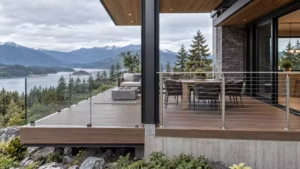
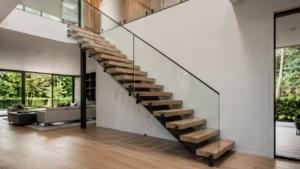
For homeowners, that might mean safely taking down a wall between kitchen and living room, supporting a larger deck, or adding a dramatic steel‑and‑glass staircase without compromising structural integrity. For business owners, it could be a new steel canopy, a stronger mezzanine, or architectural framing that doubles as a design feature for a storefront or showroom.
In both cases, structural steel only performs as intended when it’s properly designed, fabricated, and installed by qualified specialists who understand local requirements and how steel integrates with other materials like glass, aluminum, and wood. Stan Glassworks works in exactly this space—combining design, in‑house fabrication, and CWB‑certified installation to deliver structural solutions that are both robust and visually clean.
This guide walks you through what structural steel is, when you actually need it, how it compares to wood, what it costs, how to maintain it in BC’s wet climate, and what to expect when you work with a professional fabricator. Whether you’re planning a home renovation, upgrading a retail unit, or just trying to understand what that steel beam in your ceiling does, you’ll find practical, jargon‑free answers here so you can make confident, safe decisions.
2. Structural Steel 101 for Homeowners and Business Owners
Structural steel is a family of standardized steel shapes (like I‑beams, channels, angles, and hollow sections) that are specifically manufactured to carry loads and resist forces such as bending, compression, and shear. In a BC home or small commercial building, it’s the material you rely on when a component must be structural rather than decorative—supporting floors, roofs, decks, canopies, or stairs safely over time.
Unlike light‑gauge metal or simple angle brackets, structural steel members are sized and specified by engineers to handle clear spans, point loads, and local conditions like snow, wind, and seismic activity. That’s why you’ll see them referenced on structural drawings and permits whenever walls are removed or large openings are created.
What Structural Steel Is
In practical terms, structural steel usually shows up in a few key forms in BC projects:
- Beams: Horizontal members (often I‑ or H‑shapes) that carry loads from floors, roofs, or decks and transfer them to columns or bearing walls.
- Columns: Vertical supports that carry loads down to foundations; sometimes hidden in walls or expressed as exposed posts.
- Stairs and stringers: Steel members that support treads and landings, allowing longer spans and slimmer profiles than most wood systems.
- Canopies and frames: Structural skeletons for entrance canopies, patio covers, and architectural features that must carry glass, cladding, and environmental loads.
Where You’ll See It in BC Houses and Small Buildings
In homes, you’ll most often encounter structural steel when: an interior wall has been removed for an open‑concept layout, a large sliding door or window opening has been added, a heavy deck is attached, or a modern steel‑and‑glass stair is installed. In small commercial spaces—like shops, cafés, or offices—steel appears in storefront headers, roof beams, mezzanines, canopies, and feature stairs. Sometimes it’s intentionally exposed as part of the design; other times it’s concealed behind drywall and finishes. Either way, it is doing critical work, and any changes to it must be treated as structural decisions, not cosmetic ones.

3. When to Choose Structural Steel Instead of Wood
While wood framing remains the traditional choice for most BC residential construction, structural steel becomes the smarter option when you need spans, loads, or durability that wood simply can’t reliably deliver. Homeowners and business owners turn to steel for renovations where safety, longevity, and future flexibility outweigh wood’s familiarity and lower upfront cost. In seismic and wet regions like Vancouver, Squamish, and Whistler, steel’s predictability under stress makes it essential for certain high-stakes upgrades.
Open-Concept Floor Plans and Long Spans
Removing load-bearing walls to create open kitchens, great rooms, or storefront displays often exceeds wood’s span capabilities (typically 10-16 feet max without sagging). Steel I-beams or engineered channels handle 20-40+ feet cleanly, supporting floors above without bulky posts—perfect for North Van bungalows or café expansions. Stan Glassworks fabricates these to precise engineer specs, minimizing visual bulk while maximizing flow.
Heavy Loads: Decks, Roofs, and Large Openings
Heavy rooftop decks, hot tubs, green roofs, or oversized glass walls demand steel’s superior compressive strength (50,000+ PSI yield vs. wood’s variability). Cantilevered canopies over shop entrances or residential patios shrug off snow loads (up to 100 PSF in Whistler) that would crush wood frames. For seismic safety, steel’s ductility absorbs shakes better than rigid lumber, per BC Building Code Part 4 requirements.
Steel isn’t always needed—simple partitions or short spans stay wood—but when failure isn’t an option, it’s the pro choice. Next, we’ll cover ensuring that strength with engineering and safety checks.
4. Safety First: Load-Bearing, Seismic, and BC Conditions
Structural steel earns its place in BC homes and businesses because it delivers predictable, high‑performance safety under real‑world stresses—far beyond what wood can guarantee. Whether you’re a homeowner opening a wall or a shop owner adding a canopy, understanding how steel handles load‑bearing duties, earthquakes, and coastal weather is crucial before any renovation.
How Steel Performs in Earthquakes and Heavy Weather
BC’s seismic zones (up to Zone D in Vancouver) require materials that flex without fracturing. Steel’s ductility allows it to bend and deform under extreme forces while redistributing loads to prevent total collapse—unlike brittle wood that can split suddenly.
For heavy weather, steel easily handles snow loads (60-100 PSF in Whistler), high winds (120+ mph gusts in Squamish), and corrosion when properly coated. Stan Glassworks uses marine‑grade stainless or galvanized options for exterior elements, ensuring longevity without frequent replacement.
Identifying Load-Bearing Steel and Why You Must Not DIY Remove It
Look for steel I‑beams, columns, or posts tied into foundations or floors—these are load‑bearing if they’re supporting joists, trusses, or multi‑storey weight. Signs include welding/bolting to structure, fireproofing spray, or engineering stamps. Never DIY remove or modify: Even “small” changes can cause floors to sag, roofs to shift, or total failure.
Always hire a structural engineer first—they’ll confirm via calcs if replacement is needed. In BC, unpermitted changes void insurance and resale value; our team coordinates these assessments seamlessly. Safety is non‑negotiable—steel shines here, but only with proper engineering.
5. Do You Need an Engineer and Permits?
For virtually any structural steel work in BC—whether a homeowner removing a wall or a business adding a steel canopy—the answer is yes, you need a professional engineer, and likely permits too. Unlike cosmetic changes, steel modifications affect building safety, so BC Building Code mandates stamped drawings and inspections to protect lives and property.
What Engineers Do for Beams and Columns
A structural engineer analyzes your existing structure, calculates loads (dead/live/snow/seismic), and designs replacement beams/columns sized precisely (e.g., W12x26 I‑beam for a 20ft span). They specify connections, fireproofing, and integration with glass/wood—ensuring no weak points. Cost: $1K–$5K, but prevents disasters worth tens of thousands. Stan Glassworks collaborates with local P.Engs, streamlining from site survey to fab-ready plans.
Permits, Inspections, and Working Within BC Codes
Most municipalities (Vancouver, North Van, Squamish) require building permits for steel additions/modifications over minor scope—submit engineer drawings, get approved, then inspect at key stages (foundation, install, final). Fees: $500–$2K+. Strata adds bylaws review. Non‑compliance risks stop‑work orders, fines, or insurance denial. Our CWB certification speeds approvals with proven compliance.
6. Cost Breakdown: Structural Steel in BC Homes (2026 rates)
Structural steel costs more upfront than wood but often saves long‑term through durability and fewer repairs. For BC homeowners and businesses, expect $200–$600/sq m installed (2026 rates), varying by complexity, location, and finish. Always get engineer + fabricator quotes together—Stan Glassworks provides transparent breakdowns post‑site visit.
Typical Costs for Beams, Stairs, and Canopies
| Item | Size/Example | Material + Fab | Install + Engineer | Total |
|---|---|---|---|---|
| I‑Beam (20ft span) | W12x26 | $2K–$4K | $3K–$6K | $5K–$10K |
| Steel Stair/Stringer | 12 risers | $8K–$15K | $5K–$8K | $13K–$23K |
| Canopy Frame (10x20ft) | Galvanized | $10K–$20K | $8K–$15K | $18K–$35K |
Prices include CWB welding; add 20% for stainless/coatings in coastal Squamish.
Comparing Steel vs. Wood Over the Long Term
Wood: $100–$300/sq m initial, but rot/seismic upgrades add $5K–$10K every 20 years. Steel: Higher start (2–3x), but 50+ year life with minimal upkeep—ROI via insurance discounts, resale premium (3–5%), and no termite/sag worries. Hybrids (steel frame + wood finish) optimize both.
7. Structural Steel for Stairs, Decks, and Canopies
Structural steel transforms stairs, decks, and canopies from functional necessities into elegant, load‑tested features that define BC homes and businesses—handling spans and weights wood struggles with.
Strong, Slim Stairs and Landings
Steel stringers or mono‑posts create floating or cantilevered stairs with 10–20ft spans unsupported, perfect for open North Van great rooms. Lighter than concrete, rust‑resistant (galvanized), they pair seamlessly with glass treads. Cost‑effective for multi‑family too—our CWB welds ensure code‑compliant landings without bulky risers.
Weather‑Resistant Canopies and Exterior Frames
Galvanized or stainless frames support 10x20ft + glass/metal canopies over shop doors or patios, shrugging off Whistler snow (100 PSF) and Vancouver rain. Cantilevers extend 8–12ft for dramatic entries; integrate LED lighting or greenery. Decks gain steel joists for 600 PSF hot tubs, seismic‑braced for safety.
Steel enables ambitious designs safely—stairs glide, canopies shelter, decks endure. Next: Steel vs. wood.
8. Structural Steel vs. Wood: Pros, Cons, and Myths
Homeowners and business owners often debate steel vs. wood for BC renovations—steel wins for strength and longevity, wood for warmth and cost. Here’s the balanced view.
Strength, Fire, and Durability
Steel Pros: 50x stronger (50,000 PSI yield), spans 2–3x longer without sagging, non‑combustible (1–2hr fire rating), termite/rot‑proof. Ideal for seismic Vancouver or snowy Whistler—ductile flex prevents collapse.
Wood Pros: Familiar, insulating, easier cuts on‑site.
Cons: Steel conducts cold (needs insulation); wood shrinks/swells, burns fast, pests weaken over time.
Common Misconceptions from Online Forums
“Myth: Steel always looks industrial.” Reality: Paint, powder‑coat, or wrap for warmth—Stan Glassworks hides beams or pairs with wood/glass for modern elegance.
“Myth: Steel ruins resale.” Reality: Adds 3–5% value in open‑plan BC markets; appraisers love engineered spans.
“Myth: Steel framing too cold/noisy.” Reality: Thermal breaks + drywall eliminate issues; quieter long‑term than creaking wood.
| Factor | Steel | Wood |
|---|---|---|
| Span Capability | 40ft+ | 16ft max |
| Lifespan | 50–100yrs | 20–50yrs |
| Fire Safety | Superior | Vulnerable |
9. Rust, Coatings, and Maintenance in BC’s Climate
BC’s salty coastal air, endless rain, and winter salt make rust enemy #1 for structural steel—but proper coatings and care keep it pristine 50+ years.
How to Protect Steel from Moisture and Salt Air
- Galvanizing: Sacrificial layer corrodes first; lasts 50–75 years outdoors (Vancouver standard).
- Powder Coating: Colorful, UV‑durable for exposed stairs/canopies.
- Stainless Steel: Premium rust‑proof for Squamish piers. Stan Glassworks applies per engineer specs—hybrids with aluminum/glass for wet zones.
Maintenance Schedules for Exposed vs. Hidden Steel
Exposed (stairs/canopies): Annual inspect seals/paint chips; wash salt quarterly; touch‑up chips within weeks. 5‑year pro recoat.
Hidden (beams): Biennial visual via access panels; monitor for condensation.
0. Energy Efficiency and Thermal Bridging
Steel’s high conductivity (50x wood) risks “thermal bridging”—cold spots causing condensation, drafts, and higher bills—but smart design fixes this for BC’s wet/cold climate.
Insulation Strategies with Steel
Wrap beams/columns in rigid foam or spray polyurethane foam before drywall. Use thermal break pads (neoprene/gasket) at base plates—cuts heat loss 70%. For stairs/canopies, insulated panels or low‑E glass infills. Step Building Code: Continuous insulation layers minimize bridging.
Working with Your Designer and Fabricator
Engineer specifies breaks; fabricator preps (e.g., slotted holes). Stan Glassworks coordinates: Galvanized steel + foam wraps + vapor barriers for Vancouver humidity. Hybrids (steel frame + wood sheathing) blend efficiency.
11. Hidden vs. Exposed Steel: Design Choices
Structural steel offers flexibility—conceal it for seamless integration or expose it as a bold feature. BC homeowners and business owners choose based on aesthetics, maintenance access, and space vibe.
Industrial Look vs. Cleanly Concealed Beams
Exposed Steel: Raw, powder-coated I-beams or tube columns celebrate strength—industrial chic for Vancouver lofts, shop mezzanines, or Whistler chalets. Brushed stainless adds luxury; intumescent paint hides fireproofing.
Pros: Design statement, easy inspections.
Cons: Dust magnet, visible rust if uncoated.
Hidden Steel: Boxed in drywall/wood panels for “invisible” support—perfect for traditional North Vancouver kitchens or subtle storefront headers. Fireproofing spray + acoustic wrap quiets; access panels for checks.
Pros: Clean lines matching wood finishes.
Cons: Harder repairs, bulkier profiles.
Blending Steel with Glass, Wood, and Aluminum
Hybrids shine: Exposed steel stringers + glass treads for floating stairs; concealed beams + wood ceilings; powder-coated frames holding aluminum/glass canopies. Stan Glassworks fabricates seamless combos—CWB welds ensure strength meets style.
| Style | Best For | Maintenance |
|---|---|---|
| Exposed | Modern/Industrial | Higher (visible wear) |
| Hidden | Traditional/Subtle | Lower (protected) |
12. Working with a Structural Steel Fabricator in BC
A good fabricator turns engineer drawings into precise, site‑ready steel—saving time, money, and headaches. In BC, choose local pros like Stan Glassworks who handle design coordination, CWB welding, and install under one roof.
From Site Visit and Design to Fabrication
Step 1: Site Visit—Measure existing structure, note conditions (rust, connections), discuss vision.
Step 2: Engineer Drawings—Fabricator reviews for buildability (e.g., crane access).
Step 3: Shop Drawings—Detailed fab plans with tolerances.
Step 4: Fabrication—Cut, weld, coat in controlled shop (2–6 weeks). Quality checks ensure code compliance.
CWB-Certified Installation and Coordination with Other Trades
On‑site: Crane/set steel, bolt/weld connections, coordinate with glaziers (glass stairs), framers (drywall wraps), electricians (around beams). CWB certification verifies welder quals to CSA standards—mandatory for seismic BC. Stan Glassworks manages trades, minimizing delays; post‑install inspections pass smoothly.

Conclusion: Planning a Safer, Stronger Renovation
Structural steel offers BC homeowners and business owners a powerful upgrade path for renovations that demand long spans, heavy loads, and decades of reliable performance—from open‑concept walls and steel stairs in North Vancouver homes to weatherproof canopies over Squamish shopfronts.
Unlike wood’s limitations in seismic zones, moisture, and fire, steel delivers engineered predictability when paired with proper design, coatings, insulation, and finishes. You’ve now got the roadmap: recognize when steel beats wood, budget realistically ($5K–$35K typical), prioritize engineering/permits, and protect against rust with galvanizing and maintenance.
Key tips to act confidently:
- Assess first: Site visit reveals if your beam is load‑bearing—never assume.
- Engineer everything: Stamped drawings prevent disasters.
- Choose coatings wisely: Galvanized for outdoors, thermal breaks indoors.
- Partner locally: CWB‑certified fabricators like Stan Glassworks handle design‑to‑install seamlessly, coordinating trades for Vancouver, Whistler, and Lower Mainland codes.
- Think hybrid: Blend exposed industrial accents with concealed supports, glass/aluminum for style + strength.
Steel isn’t for every project—but for safer, future‑proof renos boosting resale 3–5%, it’s unbeatable.
Ready to open that kitchen wall, add a deck, or frame a canopy? Start with a free on‑site consultation. Stan Glassworks serves from North Vancouver across the region, turning structural challenges into lasting value. Contact us today—let’s build stronger.