In British Columbia, railing and guard systems aren’t just a design detail — they’re part of life safety. Any deck, balcony, stair, or rooftop accessible to people needs a guard that meets code height and load requirements. For example, decks above certain heights in BC require guards that are typically 42 inches (about 1,070 mm) high, and stair guards generally require at least 36 inches (about 900 mm).
At the same time, clients across the Lower Mainland, Squamish, and Whistler want clean sightlines, low maintenance, and long-term corrosion resistance in West Coast weather. Stan Glassworks, a CWB-certified custom metal & glass fabricator based in North Vancouver, builds railing systems, stair structures, canopies, fences & gates, partitions, and showers for residential, multi-family, and commercial projects throughout those regions.
This post breaks down why glass and metal systems have become the default choice in BC — and what you should expect when you request a quote.
1. Safety and Code Compliance Come First
Railing height and structural strength are not optional. BC code and municipal guidelines require guards on elevated walking surfaces and decks, and define minimum heights for residential use and for stairs. Typical residential decks above a certain height require guards around 42 inches (1,070 mm), while guards along interior stairs can be as low as 36 inches (900 mm) in many cases.
Glass railing systems meet those safety requirements using tempered (safety) glass. Tempered glass is engineered to handle impact and weather loads. If it ever fails, it breaks into small, blunt fragments instead of sharp shards — reducing injury risk.
For commercial, multi-family, and public spaces, guard heights are often even stricter. Commercial and multi-family decks commonly require 42-inch guards under IBC-style rules to keep occupants protected at elevated edges.
Bottom line: A properly fabricated and installed glass or metal guard is not just aesthetic — it’s a life-safety component that keeps you onside with inspectors.
2. Clear Views, Better Light, Modern Lines
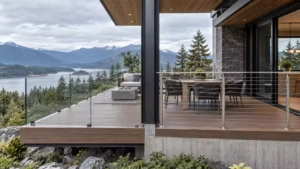
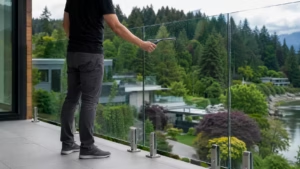
Homeowners and developers increasingly choose glass railings because they deliver an open, unobstructed view while still acting as a full-height safety barrier. With nothing blocking sightlines, decks and balconies feel larger, brighter, and more connected to the surroundings — especially in view-driven areas like North Vancouver and the Sea-to-Sky corridor.
On residential projects, this matters for lifestyle: you can enjoy the landscape, entertain outside, and maintain visual connection to kids or pets without heavy pickets or bulky framing.
On commercial and multi-family projects, glass delivers a cleaner street presence and higher perceived value. It signals modern construction and helps unify balconies, stairs, and amenity decks into one visual language.
This is why you’ll see glass railings, structural glass canopies, and custom steel stair structures featured across multi-family, mixed-use, and commercial work.
3. Built for Coastal Weather: Aluminum, Stainless, and Steel Done Right
Greater Vancouver, Squamish, and coastal BC are tough on metal. Salt air, constant moisture, and freeze-thaw cycles can accelerate corrosion — especially on exterior stairs, balcony guards, gates, and canopies.
Powder-coated aluminum
Powder-coated aluminum railing is known for being lightweight, rigid, and highly corrosion-resistant. The powder coat forms a protective layer that resists chipping, peeling, and rust, and aluminum does not warp, crack, or rot the way wood can. That means dramatically less ongoing maintenance.
For strata and multi-family work, low-maintenance aluminum systems help reduce long-term costs and service calls. For single-family homes, it means you’re not sanding and repainting railings every season.
Stainless steel and “tea staining”
In coastal zones, stainless steel can develop “tea staining” — a brown discolouration on the surface. While mostly cosmetic, it affects appearance and can get worse the closer you are to the ocean. This is why higher-grade stainless (often 316) and smoother finishes are recommended for exterior components within a few kilometres of the coast, along with regular cleaning.
A qualified fabricator will spec the correct alloy, finish, and hardware for your exposure zone instead of treating stainless steel as one-size-fits-all. That’s especially important in North Vancouver, Squamish, and Whistler, where installations see rain, snow, salt, and freeze cycles in the same year.
4. Minimal Maintenance, Long Lifecycle
Compared to wood picket railings or painted steel that needs constant touch-up, glass and powder-coated metal systems are intentionally low maintenance.
- Glass railings don’t require staining or repainting. Maintenance is usually limited to periodic cleaning with standard glass cleaner or soap-and-water.
- Powder-coated aluminum rails are designed to resist rust and surface breakdown, so you’re not dealing with flaking paint or structural rot.
- Tempered glass and engineered aluminum/steel framing are built to withstand wind, snow load, and impact in outdoor conditions.
For property managers and builders, that means fewer service calls. For homeowners, it means you get the West Coast look without West Coast upkeep.
5. Where Glass & Metal Make the Biggest Impact
We see the highest return on glass and metal systems in four areas:
- Decks, balconies, and rooftop amenity spaces
High, code-compliant guards that don’t kill the view, and that stand up to weather. - Interior / exterior staircases
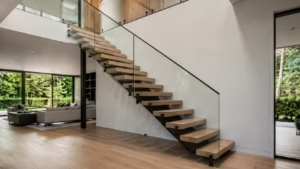
Custom steel or aluminum stair structures paired with glass or stainless guard rails create a modern core element in both residential and commercial buildings. - Entry canopies and structural glass canopies
Glazed canopies protect entry points from rain and snow while keeping the façade visually light. - Fences & gates
Powder-coated aluminum and custom metal gates provide security, privacy, and a consistent architectural line at grade, without heavy maintenance.
Across single-family, multi-family, and commercial sites, these elements are what clients see first — and what inspectors care about first.
6. What to Expect When You Work With Us
Stan Glassworks follows an end-to-end model:
- Initial contact & site intake
You reach out with photos, drawings, or a rough description. We’re local, and we serve the Lower Mainland, Squamish, and Whistler from our base in North Vancouver. - On-site consultation and measurement
We come to site, confirm code considerations (height, loading, glass type), and help you choose between tempered glass, aluminum, stainless steel, and structural steel. - In-house fabrication
Metal and glass components are fabricated to your dimensions — no “off the shelf and hope it fits.” Being CWB Certified means we’re accountable for the weld quality behind that structure. - Installation and sign-off
Our team installs, aligns, and finishes the system, and you get a clean, code-compliant result built for West Coast weather.
This matters, because railing and stair systems are one of the last things that go in before occupancy — if that work is delayed or rejected by inspection, you don’t hand over keys.
Final Takeaway
Glass and metal are not just an aesthetic flex. They check every box: safety, code compliance, strength, corrosion resistance, clear views, and minimal maintenance over time.
If you’re planning a deck upgrade, stair build, structural canopy, or guard system for a new home or multi-family/commercial project, invest in the right fabrication at the start. It’s cheaper than fixing railings after inspection.
Ready for a site visit or quote?
Call (604) 971-6633 or email stanglassworks@gmail.com and reference your location (Lower Mainland / Squamish / Whistler) plus a photo of the area you want built.