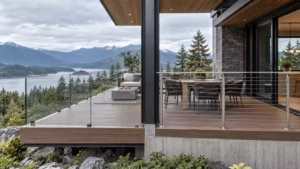
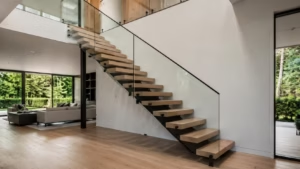
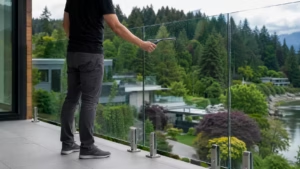
Choosing between glass railing vs cable railing can significantly affect the appearance, functionality, maintenance, and overall feel of your home.
Both options are popular in modern residential design because they create a more open look than traditional wood or picket railings. However, they perform differently when it comes to views, airflow, weather exposure, maintenance, safety, and installation.
For homeowners in British Columbia, these differences matter even more. Frequent rain, coastal moisture, wind exposure, and local building requirements can all influence which railing system is the better long-term choice.
In this guide, we compare glass railing and cable railing side by side to help you determine which option works best for your deck, balcony, or staircase.
What Is the Difference Between Glass Railing and Cable Railing?
The main difference between the two systems is the material used to create the protective barrier.
Glass railing uses large panels of safety glass supported by posts, channels, clamps, standoffs, or other structural hardware.
Cable railing uses a series of tensioned metal cables installed between structural posts.
Although both can create a contemporary appearance, this basic construction difference affects visibility, wind performance, cleaning, structural requirements, and overall design.
What Is Glass Railing?
Glass railing systems typically use tempered or laminated safety glass as the infill between structural supports.
They are commonly installed on:
- Residential decks
- Balconies
- Interior staircases
- Landings
- Terraces
- Rooftop areas
Depending on the design, the system may be fully frameless or supported by aluminum, stainless steel, or steel components.
The biggest visual advantage is transparency.
Because large glass panels replace conventional pickets or cables, the railing creates fewer visual interruptions. This can make decks feel more spacious and allow natural light to move freely through interior staircases.
Glass railing is especially popular in contemporary homes where the surrounding landscape is an important part of the design.
What Is Cable Railing?
Cable railing uses tensioned stainless steel or metal cables running between structural posts.
Its appearance is minimal but more industrial than glass.
Cable railings are often used in contemporary, coastal, modern-rustic, and industrial-style homes. The cables allow air and light to move through the railing while creating a visually lightweight barrier.
However, cable railing is not completely invisible.
Depending on the viewing angle, multiple horizontal lines may cross the landscape behind the railing. Cable tension, post spacing, fittings, and the overall guard configuration also have to be carefully considered during installation.
Glass Railing vs Cable Railing: Side-by-Side Comparison
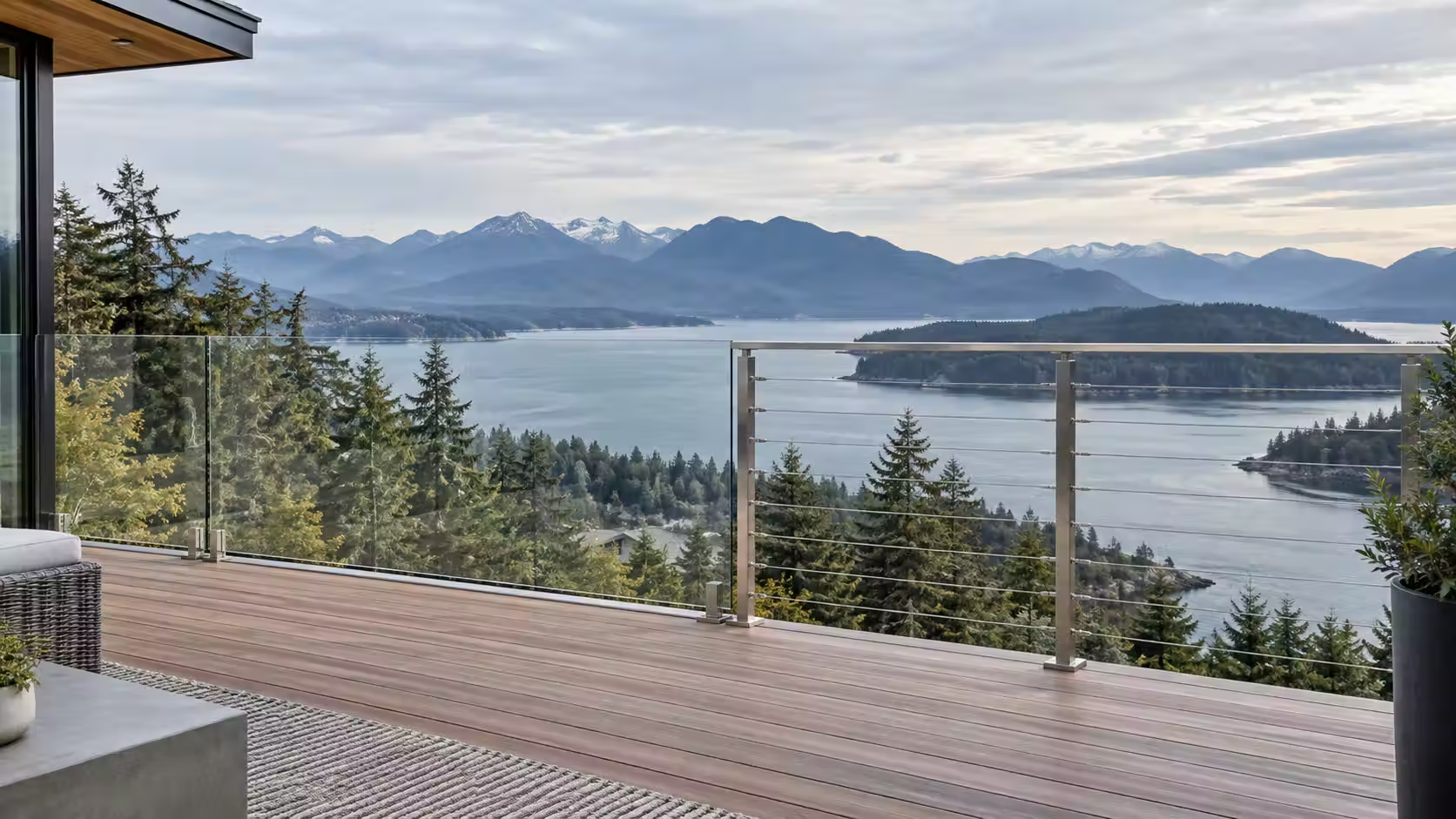
Here is a quick comparison of the two railing systems:
| Feature | Glass Railing | Cable Railing |
|---|---|---|
| View | Very clear and visually open | Open, but cables remain visible |
| Natural Light | Excellent | Excellent |
| Airflow | Reduced through solid panels | Excellent |
| Wind Protection | Can reduce direct airflow | Minimal |
| Cleaning | Glass requires routine cleaning | Less surface cleaning |
| Maintenance | Inspect glass and hardware | Inspect cables, tension, and fittings |
| Appearance | Modern, clean, architectural | Minimal, industrial, contemporary |
| Privacy Options | Frosted or tinted glass possible | Very limited |
| Installation | Precise measurement and fabrication required | Accurate post placement and cable tension required |
| Best Use | Views, modern balconies, stairs | Certain decks and contemporary designs |
Neither system is automatically better in every situation.
The best choice depends on what you value most in the space.
Which Railing Offers the Better View?
For homeowners who want to preserve a scenic view, glass railing usually has the advantage.
Clear glass creates a nearly continuous visual surface. From a deck overlooking mountains, water, forest, or the city skyline, your sightline remains relatively uninterrupted.
Cable railing still creates an open feeling, but the cables remain visible.
This difference becomes especially noticeable when sitting behind the railing rather than standing several feet away from it.
Imagine a balcony overlooking the North Shore mountains. With cable railing, several horizontal cables may cross directly through the view. With frameless glass, there are far fewer visible lines.
For view-focused properties, that difference can be significant.
Glass also works particularly well when the goal is to maintain visual continuity between an interior living space and an outdoor deck.
The trade-off is that transparent glass shows dirt more easily.
Rain spots, fingerprints, pollen, and mineral residue can reduce clarity if the panels are not cleaned periodically.
Glass Railing vs Cable Railing Cost
Cost is often one of the biggest factors when comparing glass railing vs cable railing, but there is no universal rule that one system is always cheaper.
Glass railing prices can vary depending on:
- Glass type
- Glass thickness
- Frameless or framed design
- Length of the railing
- Number of panels
- Corners and transitions
- Stair sections
- Mounting hardware
- Custom fabrication
- Installation access
- Structural requirements
Cable railing also has several cost variables, including:
- Number of posts
- Post material
- Cable quality
- Cable spacing
- Number of cable runs
- Tensioning hardware
- Corners
- Stair sections
- Structural reinforcement
- Labour
A basic cable system may cost less than a premium frameless glass railing.
However, a custom stainless steel cable railing with numerous fittings, reinforced posts, and complex stairs can also become expensive.
For homeowners who are specifically budgeting a glass installation, our guide to glass railing cost in Vancouver explains the main factors that influence pricing, including system type, hardware, layout, fabrication, and installation.
The most accurate way to compare costs is to price both systems using the same project dimensions and installation conditions.
Maintenance and Durability
Both glass and cable railing systems can provide many years of service when suitable materials are used and the installation is completed correctly.
The difference is mainly in the type of maintenance each system requires.
Glass Railing Maintenance
Glass railing has relatively simple maintenance requirements, but the transparent surface makes dirt easier to see.
Exterior glass may accumulate:
- Rain spots
- Fingerprints
- Dust
- Pollen
- Mineral deposits
- Coastal residue
This is particularly relevant in British Columbia, where frequent rain can leave marks on exposed glass.
Regular cleaning generally keeps the panels clear.
Using the correct cleaning products and non-abrasive tools is important, especially if you want to avoid streaking or damaging surrounding finishes.
For a more detailed maintenance process, see our step-by-step guide to cleaning glass railings.
It is also a good idea to periodically inspect:
- Fasteners
- Clamps
- Posts
- Channels
- Seals
- Connections
If any part of the system begins moving or appears damaged, it should be inspected rather than ignored.
Cable Railing Maintenance
Cable railing has less surface area to clean, which can make day-to-day maintenance easier.
However, cable systems depend on correct tension.
Over time, homeowners should watch for:
- Loose cables
- Changes in cable tension
- Loose fittings
- Corrosion
- Movement in posts
- Damaged connections
Exterior hardware is particularly important in coastal BC environments.
Rain, humidity, and salt exposure can accelerate corrosion when inappropriate materials or finishes are used.
Choosing the correct cable and hardware specification from the beginning can reduce maintenance issues later.
Safety and Building Code Considerations in BC
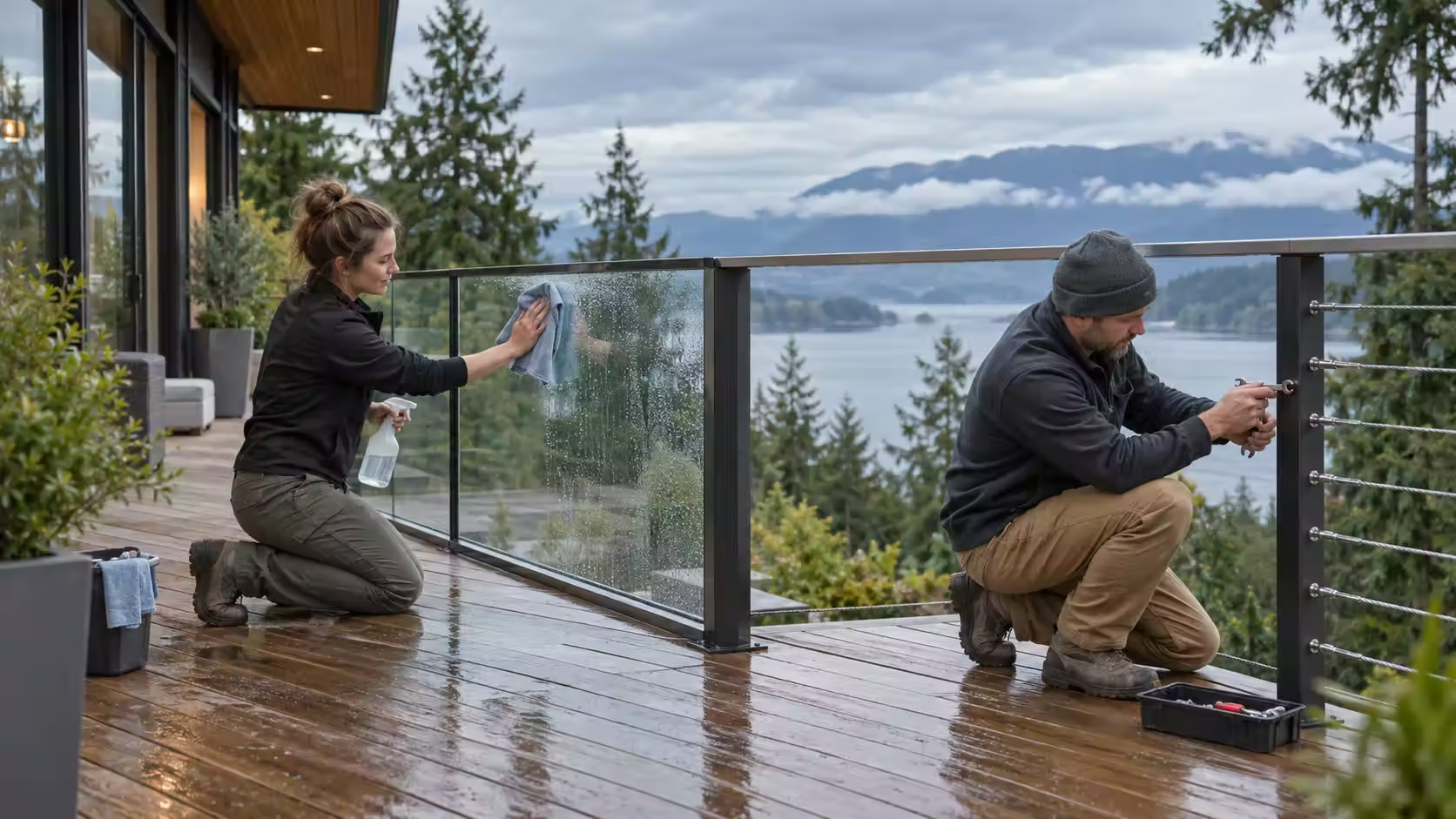
Railing systems are not only decorative elements.
They are safety components that need to be designed and installed according to applicable building requirements.
In British Columbia, guard requirements can vary depending on the building type, location, elevation, and application.
Factors that may affect the design include:
- Guard height
- Size of openings
- Structural loads
- Climbability
- Glass specification
- Post spacing
- Mounting conditions
- Stair geometry
This is particularly important with cable railing.
Homeowners sometimes see cable railing systems online and assume the same configuration can be installed anywhere.
That is not always the case.
Cable spacing, orientation, structural performance, and the overall design of the guard need to comply with requirements that apply to the specific property.
Glass railing also needs to use appropriate safety glazing and properly engineered or tested components.
If you are planning a new guard system, Stan Glassworks works with residential and commercial railing applications in the Lower Mainland, where site conditions, material selection, design, and fabrication all need to be considered together.
For properties inside Vancouver, it is also important to remember that projects may be subject to the Vancouver Building By-law rather than exactly the same requirements applied elsewhere in BC.
The best approach is to verify the requirements before fabrication begins.
Wind and Weather Performance
British Columbia’s weather can play an important role in railing selection.
Glass and cable systems behave very differently in windy environments.
Cable railing is highly permeable.
Air moves between the cables with relatively little resistance.
For homeowners who want maximum airflow on a deck, that can be an advantage.
Glass creates a continuous surface instead.
This can reduce direct wind passing through the railing and may make some balconies or seating areas feel more comfortable.
However, a glass railing should not automatically be treated as a simple windscreen.
Solid panels experience wind loads.
On exposed balconies, rooftops, or elevated properties, panel size, mounting method, hardware, connections, and supporting structure need to be appropriate for those loads.
Weather exposure can also affect maintenance.
Exterior railing systems in BC may experience:
- Frequent rain
- Moisture
- Coastal air
- Dirt and organic debris
- Temperature changes
- Freeze-thaw conditions in some regions
A properly planned railing system should account for these conditions before installation.
Which Railing Is Best for Decks, Balconies, and Stairs?
The best railing system often depends on where it will be installed.
It is entirely possible for glass to be the better choice on a balcony while another system works better elsewhere on the same property.
Best Railing for Decks and Balconies
Glass railing is particularly well suited to decks and balconies where the surrounding landscape is part of the home’s appeal.
It is worth considering if:
- You want to preserve an ocean or mountain view
- You prefer a modern architectural style
- You want fewer visual interruptions
- You want some protection from direct wind
- You want the deck to feel more open
Cable railing may be worth considering if:
- Maximum airflow is important
- Horizontal lines suit the architecture
- You prefer a minimal industrial look
- You want less glass surface to clean
- The proposed configuration meets applicable requirements
For properties with premium views, glass is often selected because it keeps the railing visually secondary to the landscape.
Best Railing for Stairs
Glass railing is also very popular for interior staircases.
It pairs particularly well with:
- Floating stairs
- Open-riser stairs
- Wood treads
- Steel stringers
- Contemporary interiors
Transparent panels allow light to move between levels and help prevent the staircase from visually closing off the room.
Cable railing can also create an attractive staircase, particularly in industrial or modern-rustic homes.
However, stairs make cable systems more complex because of angled runs, termination points, openings, tension, and supporting posts.
For projects involving stairs, balconies, terraces, or rooftops, exploring professionally designed custom guardrails can help ensure the railing system works with the surrounding architecture and structural conditions rather than being treated as a separate decorative component.
Glass Railing vs Cable Railing: Which Should You Choose?
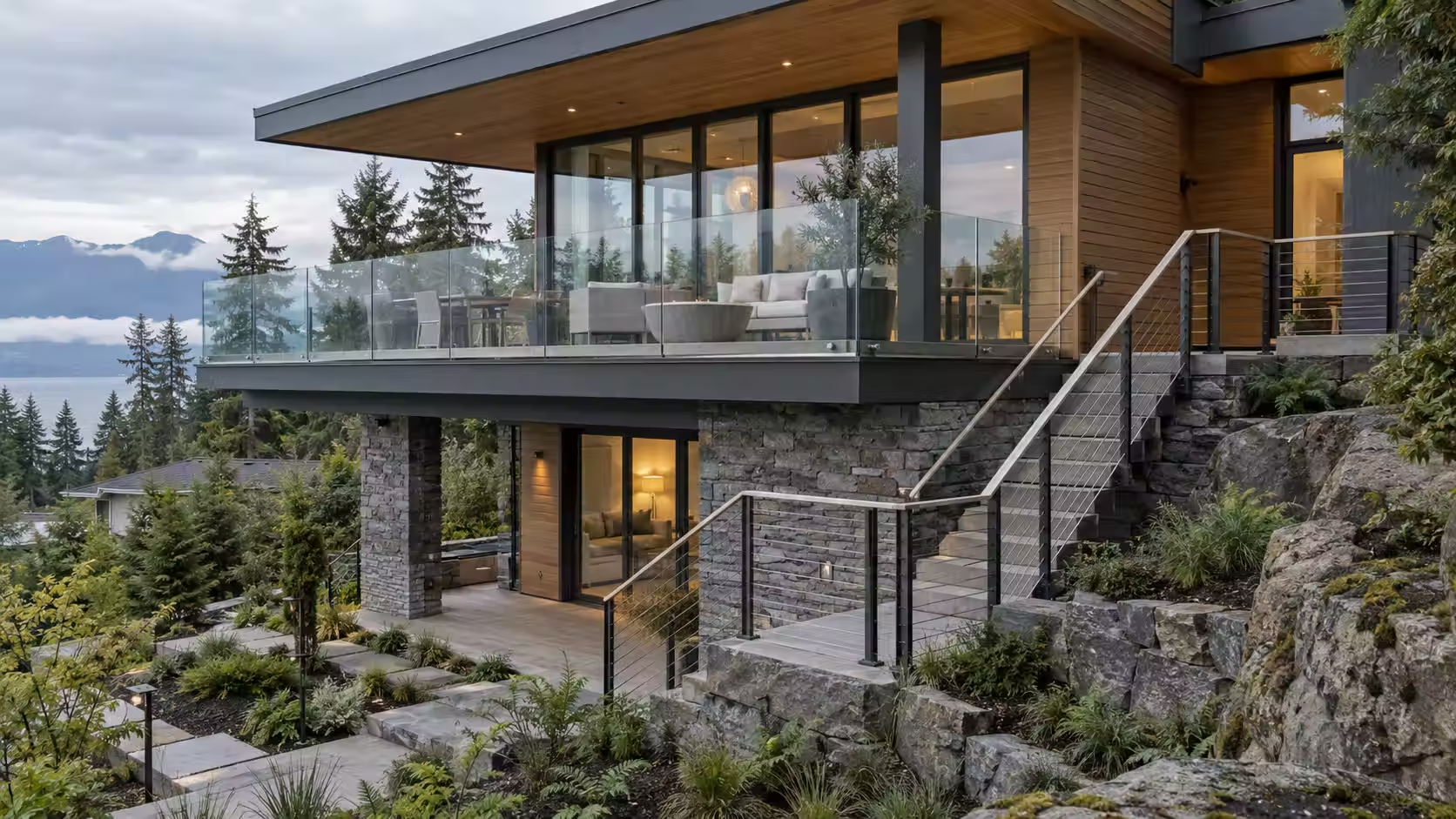
The best way to make a decision is to identify your priorities.
Choose glass railing if you value:
- Clear views
- Contemporary design
- A premium appearance
- Visual openness
- A solid infill barrier
- Reduced direct airflow
- Integration with modern staircases
Consider cable railing if you value:
- Maximum airflow
- Minimal visual mass
- Industrial or coastal styling
- Less large-surface cleaning
- A cable system that works with your site’s structural and code requirements
One of the most important questions is often overlooked:
What does your actual property allow?
A railing is installed on a real deck, slab, balcony, or staircase.
The condition and construction of that structure influence what can be safely and practically installed.
For example, the railing system may need to work with:
- Existing deck framing
- Concrete slabs
- Stair stringers
- Waterproofing systems
- Parapets
- Fascia mounting conditions
- Limited edge distances
- Existing finishes
This is why choosing a railing solely from inspiration photos can create problems later.
The appearance, structural conditions, maintenance requirements, budget, and local regulations should all be considered together.
Final Thoughts
The glass railing vs cable railing decision should be based on more than appearance.
Glass is often the stronger choice when uninterrupted views, modern architecture, and visual openness are the main priorities.
Cable railing can be a good fit when airflow, a lighter industrial aesthetic, and minimal surface cleaning are more important.
For a mountain-view deck, glass may make more sense.
For another property, cable railing may better suit the architectural style and exposure.
The most successful railing projects consider the entire property rather than treating the guard as an isolated design element.
Look at the view, wind exposure, maintenance expectations, existing structure, budget, and applicable building requirements together. Once those factors are clear, choosing between glass and cable railing becomes much easier.
Frequently Asked Questions
1. Is Glass Railing Safer Than Cable Railing?
Neither railing type is automatically safer in every situation.
Safety depends on the complete system.
A properly designed glass railing uses appropriate safety glass, hardware, supports, and mounting methods.
A cable railing depends on correct spacing, cable tension, fittings, posts, and structural connections.
One practical difference is that glass creates a continuous solid infill surface, while cable railing contains openings between individual cables.
The proposed system should therefore be evaluated as a complete guard rather than judging safety based only on the material.
2. Which Lasts Longer: Glass or Cable Railing?
Both systems can have a long service life when high-quality materials are used and the installation is appropriate for the environment.
Glass itself does not corrode.
However, the hardware supporting the glass still needs to be suitable for exterior conditions.
Cable railing durability depends heavily on:
- Cable quality
- Fittings
- Post material
- Installation
- Environmental exposure
In coastal environments, corrosion resistance should be considered carefully regardless of which railing system you choose.
3. Which Railing Requires Less Maintenance?
Cable railing usually requires less routine surface cleaning because there are no large transparent panels.
Glass railing needs more frequent cosmetic cleaning if you want to maintain a perfectly clear view.
However, cable railing still requires inspection of cables, fittings, posts, and tension.
So the difference is less about one being maintenance-free and more about the type of maintenance you prefer.
Can You Install Cable Railing in British Columbia?
Cable railing may be possible in British Columbia, but the proposed guard system must comply with the requirements that apply to the specific property.
Factors such as opening size, guard height, structural loads, cable configuration, and climbability may affect whether a particular design is appropriate.
Municipal requirements can also differ.
For example, Vancouver operates under its own building by-law.
Before purchasing a pre-designed cable system or ordering custom fabrication, confirm that the proposed design is appropriate for your project.